
40 min
Trevi Fountain and Underground Aqueduct Tour
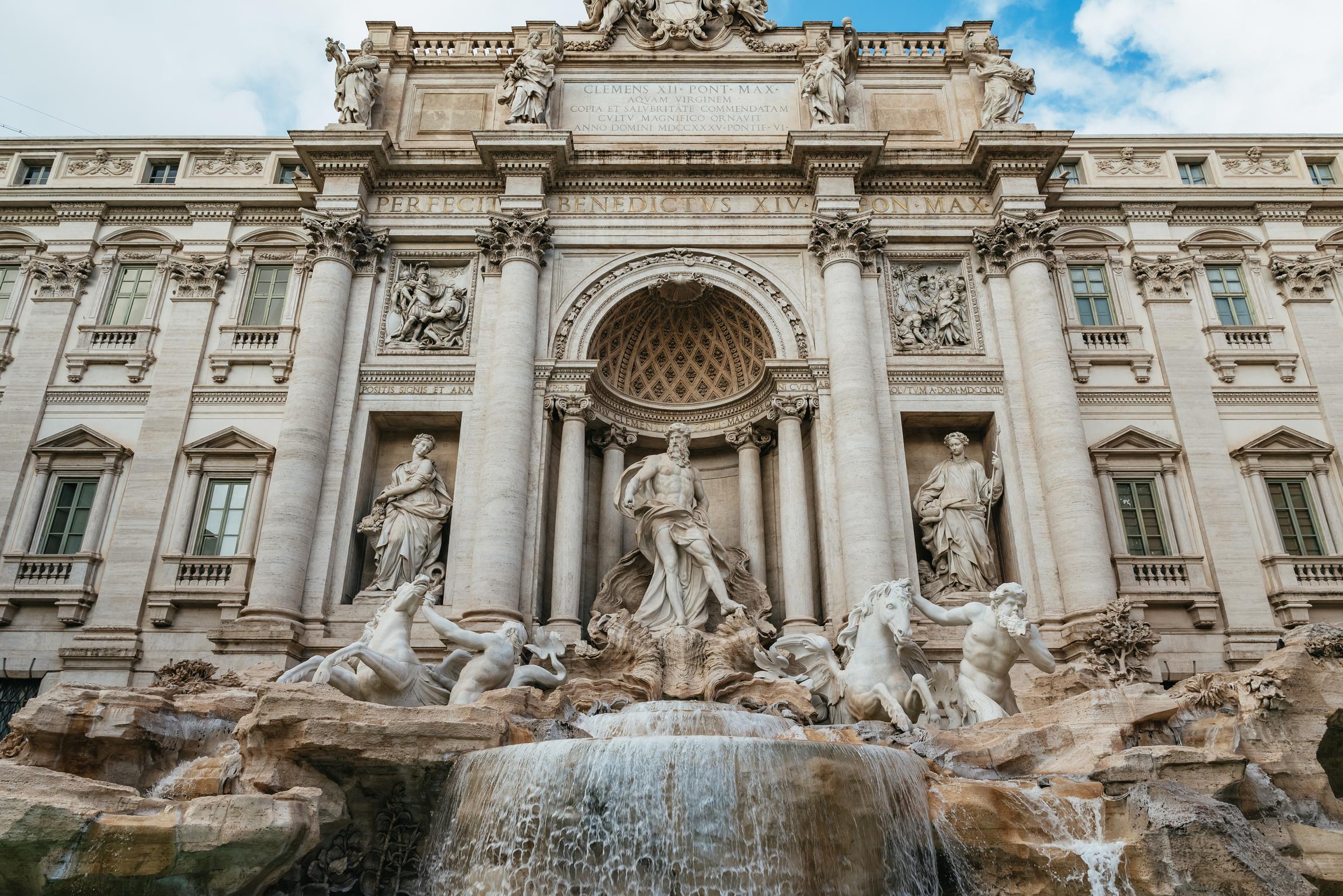
Explore Rome's famous fountain and descend to a 2,000-year-old functioning aqueduct beneath the city
Reserve

Hand-picked by our editors — only the best 5 underground experiences from 12 reviewed.
Verified partners for every tour, free cancellation where available, and instant confirmation on every booking.
40 min
Explore Rome's famous fountain and descend to a 2,000-year-old functioning aqueduct beneath the city
Reserve
1 hr
Explore ancient Roman ruins beneath the Trevi Fountain and discover a hidden archaeological treasure
Reserve
2 hr
Follow an ancient Roman waterway from the Spanish Steps to Trevi Fountain, exploring hidden ruins beneath the city
ReservePrices from verified partners. Availability updates in real time at checkout. Free cancellation policies apply where shown.
The landmarks, rooms, and views travelers on this tour remember — all visible on a single visit.
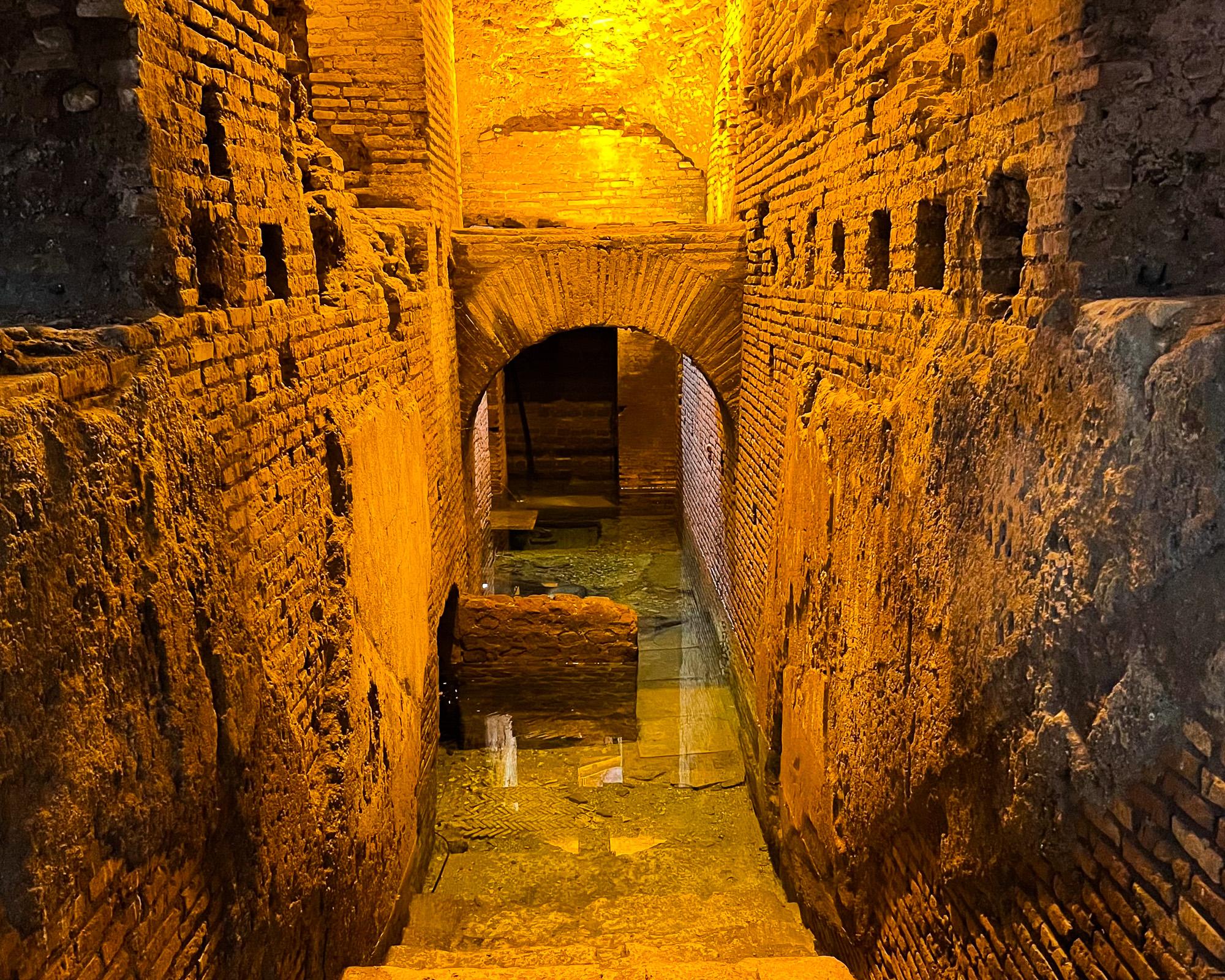
The main water distribution tank that regulated the flow of the ancient Aqua Virgo aqueduct.
Remains of a wealthy imperial-era residence featuring intricate floor mosaics and wall decor.
A striking marble sculpture discovered during the excavation of the site.
Over 14,000 fragments of ancient pottery found during the restoration of the former cinema.
Visible layers showing the evolution of the site from Nero's fire to medieval housing.
They complement each other; visitors often find the Vicus Caprarius the more immersive experience for historical study, whereas the plaza offers the iconic view of the Baroque landmark.
| Feature | Top pick Vicus Caprarius | Fountain Plaza |
|---|---|---|
Viewpoint |
Subterranean ruins | Street level square |
Ticket Cost |
4 EUR | Free |
Crowd Density |
Low to moderate | Very high |
Historical Insight |
Detailed archaeological context | Architectural observation |
Visit Duration |
30–45 minutes | 15–30 minutes |
| See tickets → |
Verdict: Securing trevi fountain underground tickets tours provides a quiet contrast to the bustling crowds of the plaza, making it the superior choice for travelers seeking historical depth through a dedicated trevi fountain underground tickets tour or similar trevi fountain underground tickets tickets access.
Choose your ticket, select your date, and reserve in under two minutes. Secure checkout handled by our verified partner.
Instant confirmation by email, with a mobile voucher you can save offline. No printing, no queuing at a collection desk.
Arrive at the entrance, show your voucher on your phone, and walk in. Most tickets include priority or skip-the-line access.
Practical details for your visit straight from our verified partners — hours, access, rules, and how to get there.
No specific dress code is enforced, but comfortable walking shoes are recommended for exploring the Vicus Caprarius archaeological site.
Travel bags and large items are not permitted inside Vicus Caprarius. Keep belongings minimal as space is limited.
Photography is generally permitted, though the use of flash and tripods may be restricted in certain sections of the archaeological area to protect the structures.
Vicus Caprarius has limited accessibility due to its underground location, including stairs and narrow pathways without elevator access.
The site is well-suited for families, offering an engaging way to learn about Rome's history. Children under 14 years old enter for free.
Food and drink are not permitted inside the subterranean archaeological site to maintain the preservation of the ruins.
Best time to go, insider tips, nearby landmarks, and the cancellation fine print — flip through to skim what matters to you.
Flexible, no hidden fees.
For direct bookings at Vicus Caprarius, contact the operator via WhatsApp to manage your reservation. Entrance fee for a standard self-guided visit remains 4 EUR.
Twenty-six centuries of water engineering lie beneath the cobblestones at Vicolo del Puttarello, where the Vicus Caprarius archaeological zone preserves the subterranean chambers of Rome's Aqua Virgo aqueduct. Completed in 19 BCE by Marcus Agrippa to supply his public baths, the aqueduct still carries spring water from Salone—fourteen miles east of the city—into the Trevi Fountain above. The underground site was discovered in 1999 during routine building renovations, revealing not only the ancient waterworks but also the remains of a luxury Imperial-era apartment complex, complete with frescoed walls, mosaic floors, and a private cistern. Today the site functions as a working archaeological laboratory. Visitors descend nine meters below street level into climate-controlled galleries where the original aqueduct channel runs alongside stratified residential ruins spanning the first through fourth centuries CE. The Aqua Virgo remains operational—its clear flow audible in the exposed conduit—making this one of the few places in Rome where ancient infrastructure still performs its original function. The apartment remains include a service corridor, storage rooms, and a private water distribution system that tapped directly into the public aqueduct, a privilege reserved for the wealthiest residents. The site takes its name from the Vicus Caprarius, a Roman street referenced in ancient property records. Among the recovered artifacts are over eight hundred coins spanning five centuries, African red slip pottery from Carthaginian trade routes, and fragments of a colossal marble statue likely depicting a member of the Severan dynasty. The coin hoard provides a precise chronology of the building's occupation and eventual abandonment during the Gothic sieges of the sixth century, when Rome's population collapsed and maintenance of the aqueduct system became impossible. Conservation work continues on-site. Archaeologists have stabilized the frescoes using techniques developed for Pompeii, and ongoing excavation in the eastern gallery suggests the residential complex extended beneath the modern Palazzo Poli. Trevi Fountain underground tickets provide access to these working excavations, where stratigraphic layers remain visible in the gallery walls and interpretive panels explain the engineering principles behind gravity-fed aqueduct distribution. The site operates Tuesday through Sunday with limited daily capacity to protect the fragile environment, and advance reservation is standard practice during peak visitation months.
"The Aqua Virgo remains operational—its clear flow audible in the exposed conduit—making this one of the few places in Rome where ancient infrastructure still performs its original function."
A step-by-step walkthrough of the visit — what you'll see, how long each stage takes, and the details that matter.
You enter through an unmarked doorway on Vicolo del Puttarello, twenty meters east of the fountain's basin. The staircase descends through stratified building phases—medieval foundations give way to Renaissance cellars, then abruptly to Imperial brick. At the base, nine meters below street level, the temperature drops and you hear water moving through stone. The first gallery runs parallel to the ancient aqueduct channel. You walk alongside the exposed conduit where the Aqua Virgo still flows, its surface reflecting the gallery lights. Interpretive panels explain the gradient engineering: a drop of thirty-four centimeters per kilometer maintained across fourteen miles. Ahead, the residential ruins begin—a mosaic threshold, frescoed walls in Pompeian red, and the remains of a private cistern that once stored water diverted from the main channel. You pause at the coin display. Eight hundred bronze and silver pieces recovered from the fill layers, arranged chronologically from Augustus through Justinian. The latest coins date to 537 CE, when the Ostrogothic siege cut the aqueducts and emptied the city. Beyond, the eastern gallery remains under excavation—exposed stratigraphy, wooden scaffolding, and the foundation walls of the Palazzo Poli visible overhead. The exit staircase returns you to daylight fifteen meters from where you entered, the roar of the fountain audible again.
Vicus Caprarius is open Tuesday to Sunday from 11:00–17:00, with the last admission at 16:30.
Yes, accessibility at Vicus Caprarius is limited due to narrow pathways and stairs with no elevator.
Yes, large travel bags, umbrellas, and helmets are prohibited at Vicus Caprarius.
Yes, photography is allowed, though flash and tripods may be restricted within Vicus Caprarius.
The best arrival window is 11:00–16:00 to avoid crowds and ensure your entry at Vicus Caprarius.
There is no formal dress code, but sturdy footwear is recommended for the uneven surfaces at Vicus Caprarius.
No, food and drinks are strictly prohibited inside the Vicus Caprarius archaeological zone.
Vicus Caprarius is located at Vicolo del Puttarello, 25, easily reachable by public transport near the Trevi Fountain.
Yes, children are welcome, and those under 14 enter Vicus Caprarius for free.
Reservations should be managed via WhatsApp with the official operator of Vicus Caprarius.