40 min
Trevi Fountain Underground Tour
Discover the secrets beneath Rome's most famous fountain on this 40-minute guided underground adventure.
Reserve
Descend beneath the piazza, where ancient aqueducts still whisper
Hand-picked by our editors — only the best 3 underground experiences from 12 reviewed.
Verified partners for Trevi Fountain Underground tours, free cancellation where available, and instant confirmation on every booking.
40 min
Discover the secrets beneath Rome's most famous fountain on this 40-minute guided underground adventure.
Reserve
1 hr
Explore subterranean Roman ruins beneath the famous fountain and discover centuries-old treasures
Reserve
50 min
Descend beneath Rome's most famous fountain to discover ancient waterways and hidden Roman streets
ReservePrices from verified partners. Availability updates in real time at checkout. Free cancellation policies apply where shown.
Every Trevi Fountain Underground tour side-by-side — duration, what's included, how you redeem.
| Experience | Duration | Rating | Pickup | Guide | Small group | Free cancel. | Price | |
|---|---|---|---|---|---|---|---|---|
|
Standard Entry Most popular
Trevi Fountain Underground Tour
|
40 min | ★ 4.3 | ✓ | ✓ | — | ✓ | €32 | Book → |
|
Standard Entry
Underground Trevi Fountain & Ancient Ruins Tour
|
1 hr | ★ 4.5 | — | ✓ | — | ✓ | €36 | Book → |
|
Standard Entry
Trevi Fountain & Underground Aqueduct Experience
|
50 min | ★ 4.2 | — | ✓ | ✓ | ✓ | €30 | Book → |
All prices from verified partners. Availability and exact terms confirmed at checkout.
The subterranean archaeological site offers a quiet historical reflection, whereas the plaza provides the iconic, bustling atmosphere of the famous Roman landmark.
| Feature | Top pick Vicus Caprarius | Trevi Fountain Plaza |
|---|---|---|
Environment |
Enclosed archaeological ruins | |
Primary Focus |
Ancient masonry and water systems | |
Noise Levels |
Quiet and echoic | |
Visitor Density |
Low to moderate | |
Historical Context |
First-century imperial structures | |
| See tickets → |
Verdict: Choose the trevi fountain underground tour to escape the crowds and explore hidden layers of the city, or select the plaza if you prioritize the classic view of the baroque fountain and local street life. Booking trevi fountain underground tour tickets allows for a deeper appreciation of the site's hidden architecture, while visiting the plaza is essential for a complete Rome sightseeing experience. The trevi fountain underground tour tours provide a unique perspective on the city's aquatic history compared to the standard trevi fountain underground tour tour available at the surface level.
Choose your ticket, select your date, and reserve in under two minutes. Secure checkout handled by our verified partner.
Instant confirmation by email, with a mobile voucher you can save offline. No printing, no queuing at a collection desk.
Arrive at the entrance, show your voucher on your phone, and walk in. Most tickets include priority or skip-the-line access.
Practical details for Trevi Fountain Underground tickets straight from our verified partners — hours, access, rules, and how to get there.
Vicolo del Puttarello 25, 00187 Roma
Look for the entrance near the former cinema.
Open in Google MapsTake Metro Line A to Barberini station and walk about 10 minutes.
Ask the driver to drop you off near the Trevi Fountain area.
Casual and comfortable attire is recommended for the trevi fountain underground tour. Given the subterranean environment, sturdy footwear is advised for navigating historic stone surfaces.
Due to the compact nature of this ancient site, large backpacks and bulky bags are not permitted. Please travel light to ensure a smooth trevi fountain underground tour experience.
Photography is permitted during your trevi fountain underground tour, provided it does not disrupt other visitors. Flash photography is generally discouraged to protect the delicate archaeological remains.
The site is located below street level and involves descending stairs into an ancient excavation zone. Please note that the uneven ground and historic steps may pose challenges for visitors with mobility issues.
Mobile phones may be used for photos, but please keep them on silent mode. Using your phone to document your trevi fountain underground tour helps keep the atmosphere respectful for all guests.
Families are welcome to explore this hidden Rome landmark together. The trevi fountain underground tour is educational, though children should be supervised closely near the historic water features.
Eating and drinking are strictly prohibited within the archaeological site. Keep all food items sealed in your bag until you return to the surface level.
Animals are not permitted inside the archaeological area. Please make arrangements for your pets before arriving for your scheduled visit.
As of August 2026, the site remains a popular alternative to the busy Trevi Fountain plaza. Your trevi fountain underground tour offers a quiet, climate-controlled glimpse into Roman history.
Vicolo del Puttarello 25, 00187 Roma
Look for the entrance near the former cinema.
Get directionsBest time to go, insider tips, nearby landmarks, and the cancellation fine print — flip through to skim what matters to you.
How crowds, weather, and events shift across the year.
Mild temperatures make walking between the Trevi Fountain and this site ideal for visitors.
August visits are perfect for escaping the outdoor heat in this cool underground space.
Fewer crowds after the peak summer season allow for a more intimate look at the ruins.
Cooler and quieter, offering a serene atmosphere for exploring ancient Roman history.
Small details that turn a good visit into a great one.
Since capacity is limited for every trevi fountain underground tour, send a WhatsApp message in advance to secure your slot.
Plan to arrive by 16:00 to ensure you can fully enjoy your trevi fountain underground tour before the 16:30 last entry time.
Visit the famous fountain first, then escape the crowds with a quick walk to the underground entrance nearby.
Admission for individual visitors is 4 EUR, though various reduced rates apply for students and seniors.
Non-bookable sights within a short walk — free to visit, easy to pair.
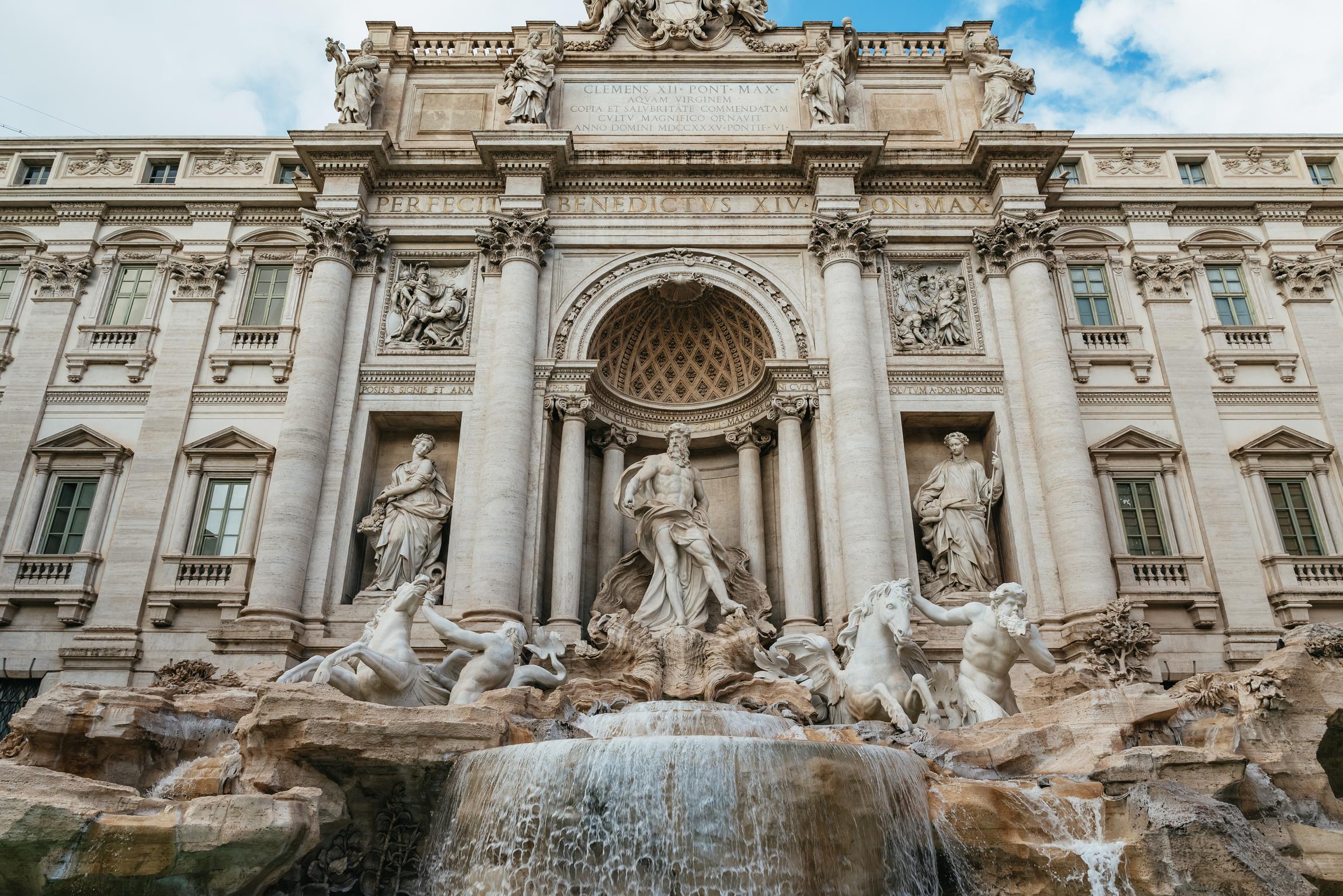
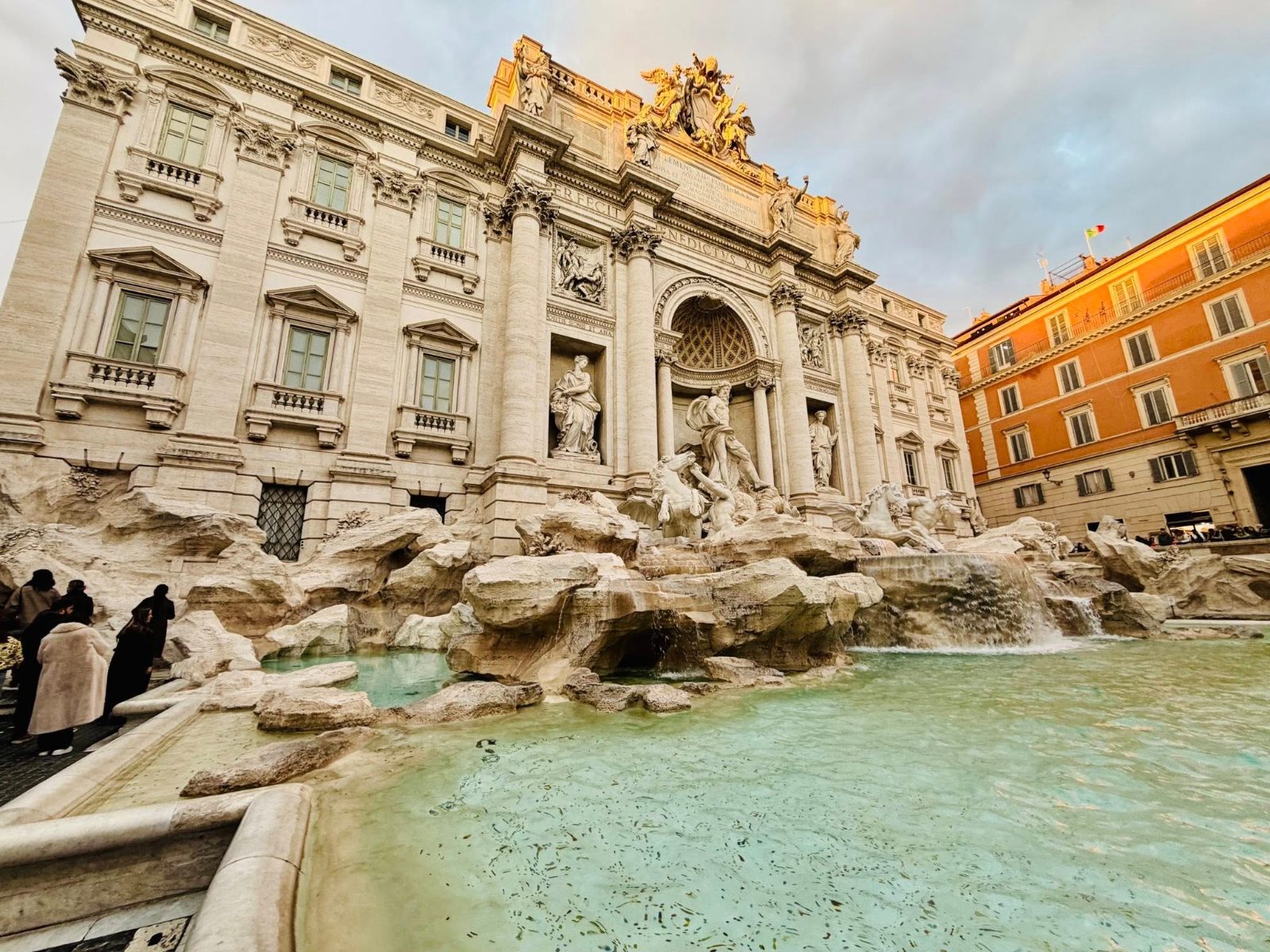
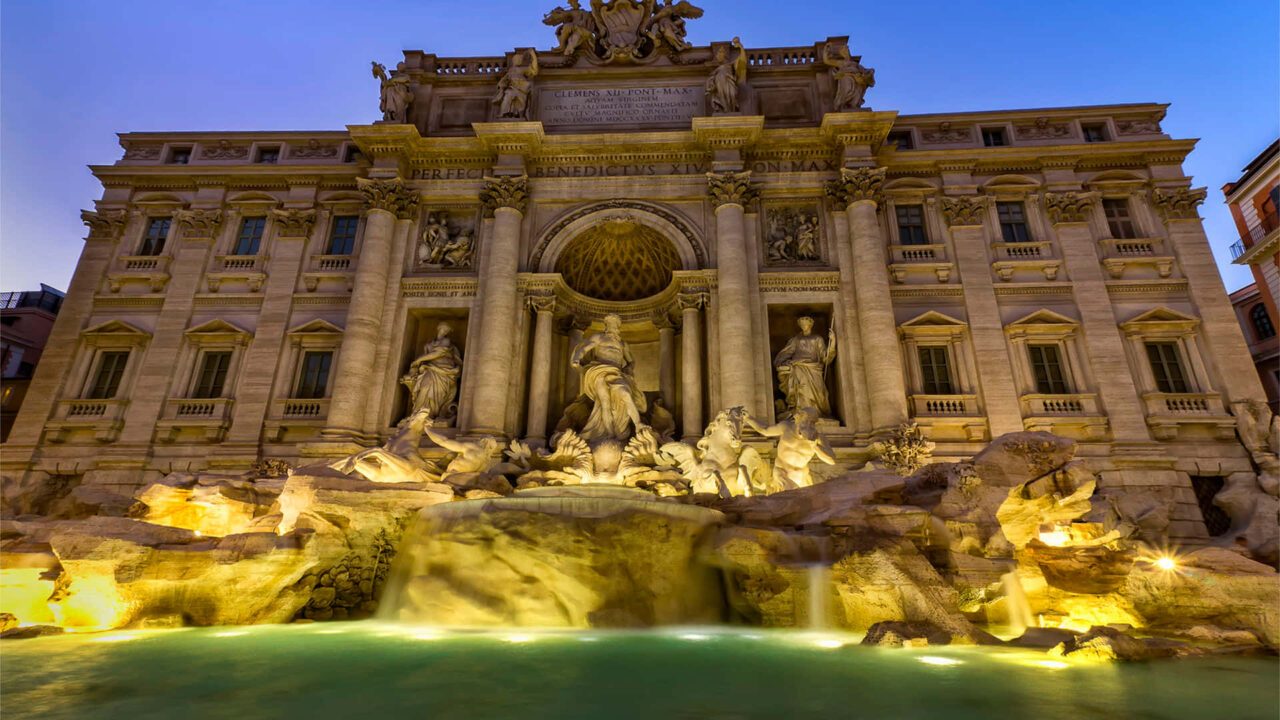
The world-famous Baroque fountain fed by the same aqueduct.
An elegant historical shopping arcade with impressive architecture.
A notable Baroque church located right next to the fountain.
A historic square featuring the Column of Marcus Aurelius.
Flexible, no hidden fees.
If you need to cancel your trevi fountain underground tour, please notify the operator via WhatsApp. No fees are charged for cancellations made in accordance with their booking guidelines.
Hand-picked options within walking distance — pick a district for vibe, or a specific hotel for convenience.
Classic hotel located just steps from the fountain area.
High-end boutique stay within walking distance of the ruins.
The immediate area offers various budget and boutique apartments.
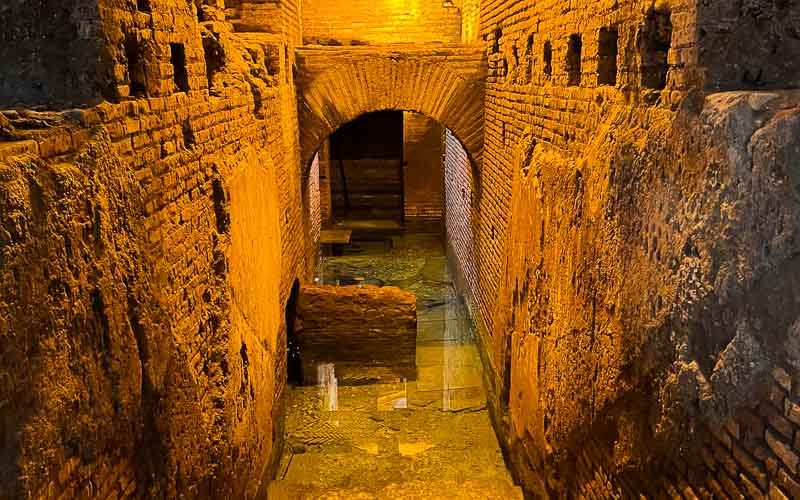
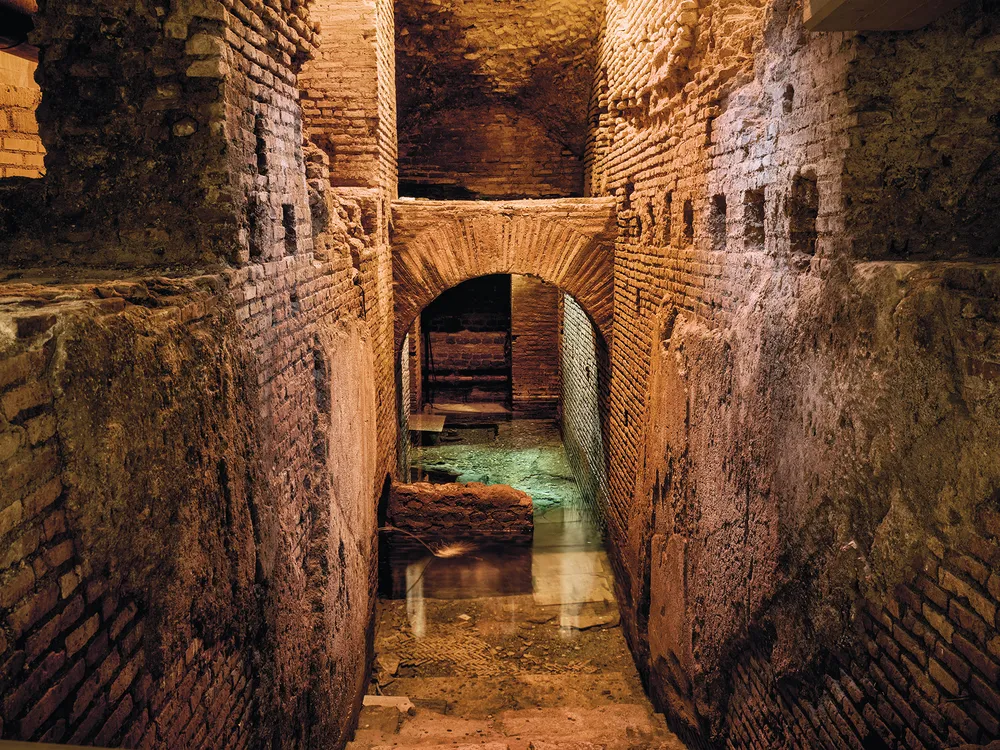
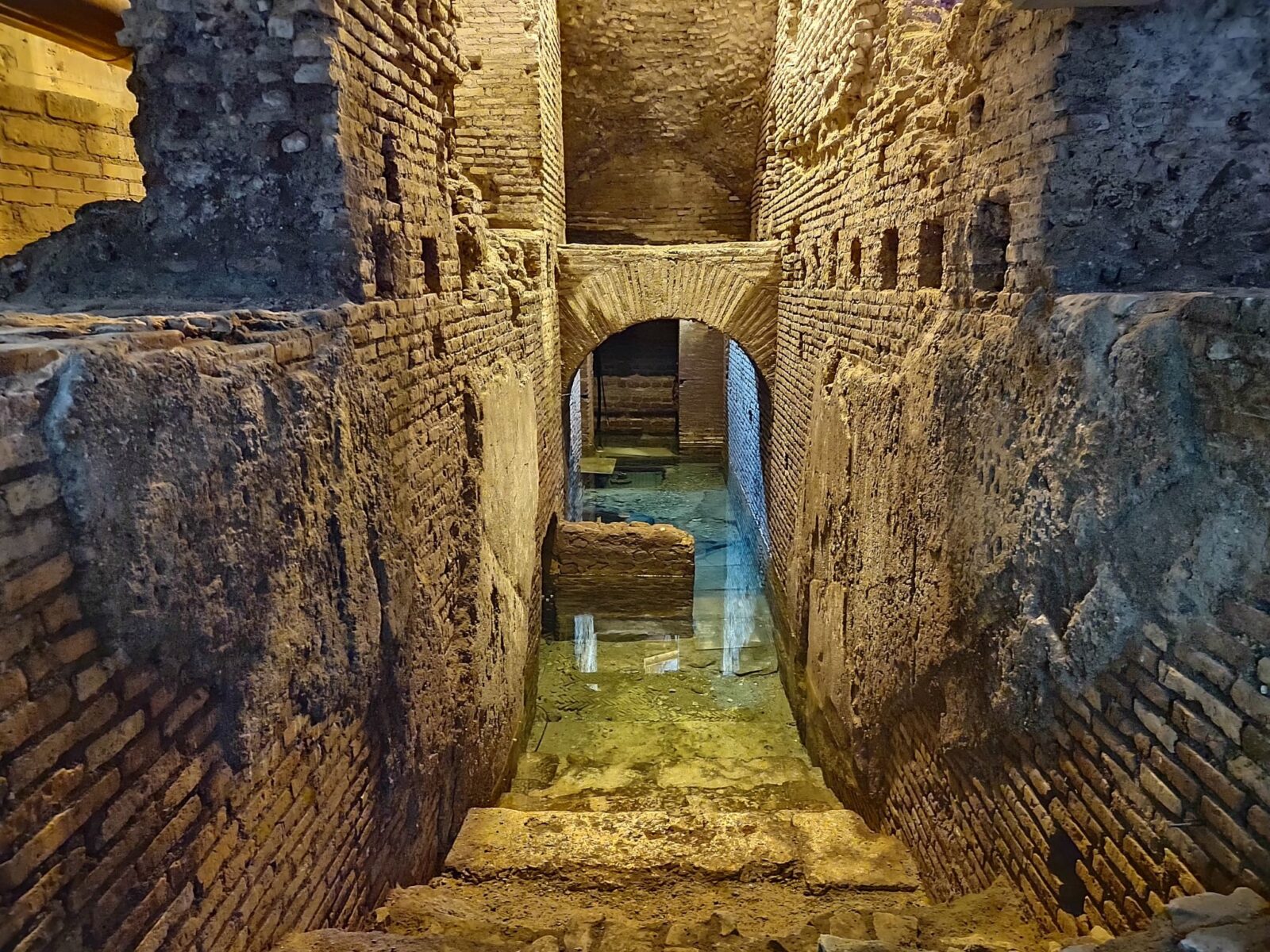
Seven meters beneath the cobblestones of Vicolo del Puttarello lies a 2,000-year-old apartment block, its walls still marked by fire from Nero's great conflagration of 64 CE.
The Vicus Caprarius archaeological site, discovered during routine building maintenance in 1999, preserves a cross-section of Imperial Rome's urban infrastructure rarely visible to modern eyes. What began as an emergency excavation revealed a luxury domus with African marble floors, a working segment of the Aqua Virgo aqueduct, and a drainage system that continued functioning into the Renaissance.
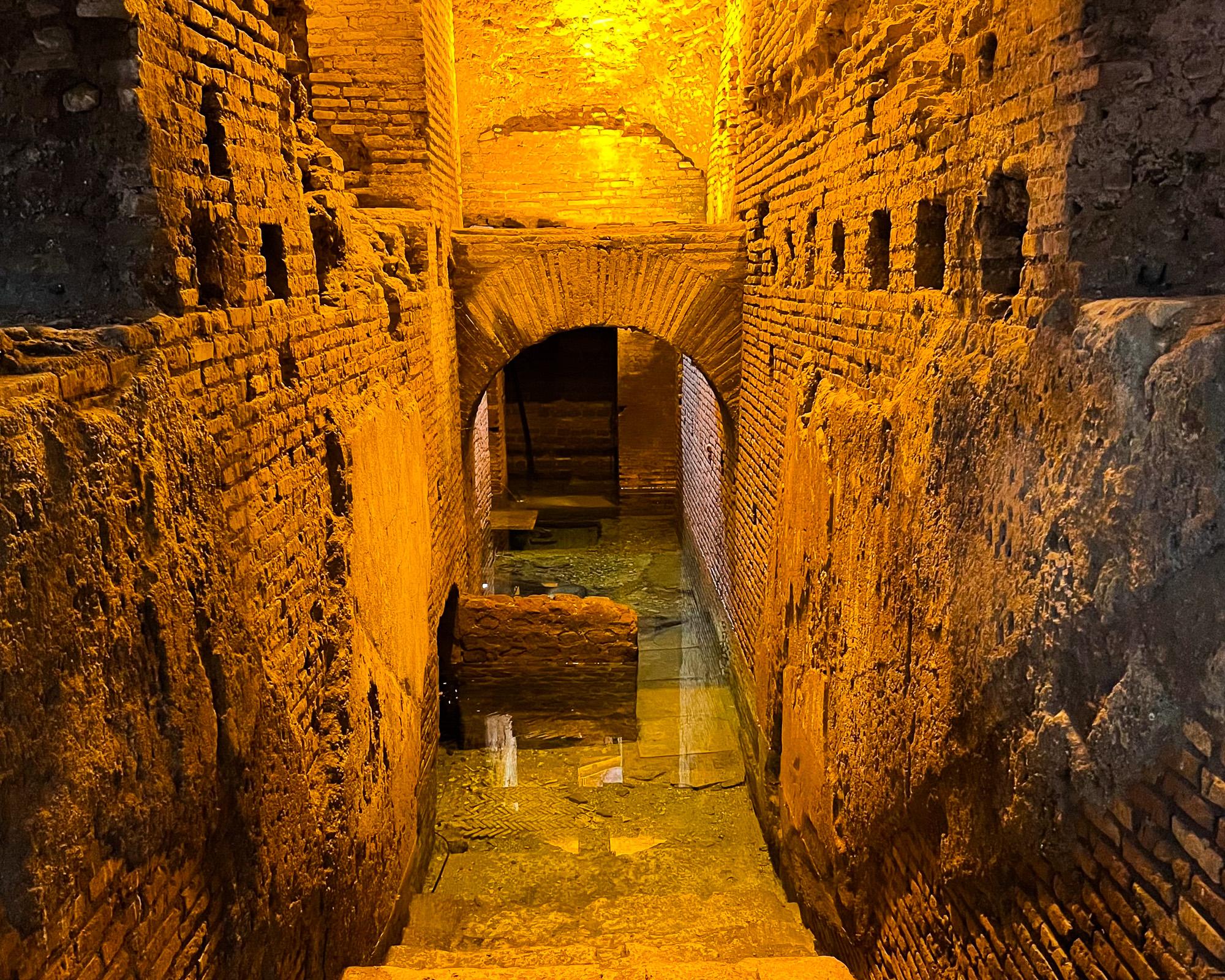
The Aqua Virgo, completed in 19 BCE by Marcus Agrippa to supply his public baths, remains Rome's only ancient aqueduct still delivering water to the city center. Its subterranean channel runs directly beneath the Trevi Fountain above, feeding the Baroque masterpiece through the same limestone conduits that once served the emperor Claudius. The Vicus Caprarius underground tour follows 80 meters of this aqueduct, where millennia of calcium deposits coat the vaulted ceilings in pale mineral drips. Terracotta fistulae—lead-free water pipes developed after Rome's physicians connected lead with madness—protrude from masonry that predates Christianity.
Above the aqueduct level, excavators uncovered a residential insula whose inhabitants abandoned it during the third century crisis. Frescoes in crimson and ochre, though faded, depict theatrical masks and geometric borders characteristic of the Severan period. A terracotta oil lamp, still black with ancient soot, rests in its original wall niche. Coins stamped with the profiles of Trajan and Hadrian litter the floor where they fell through gaps in the wooden planking that once formed an upper story. The site's most poignant artifact is a bronze face of Apollo, severed from a larger statue, its eyes hollow where precious stones were pried out during the Gothic invasions.
Archaeologists preserve the site under controlled humidity, maintaining the delicate balance that keeps frescoes from flaking and preventing mold growth on exposed brickwork. Unlike Rome's catacombs or the Colosseum's hypogeum, Vicus Caprarius receives fewer than 15,000 visitors annually, making it one of the capital's least crowded Imperial-era sites. The cramped corridors and low ceilings—built for Romans averaging 165 centimeters in height—create an intimacy absent from monumental forums. Standing beside the flowing aqueduct, you hear the same water rush that accompanied daily life when Ovid walked these streets and Juvenal composed his satires.

"The Aqua Virgo remains Rome's only ancient aqueduct still delivering water to the city center, feeding the Trevi Fountain through limestone conduits that once served the emperor Claudius."
A step-by-step walkthrough of Trevi Fountain Underground tickets — what you'll see, how long each stage takes, and the details that matter.
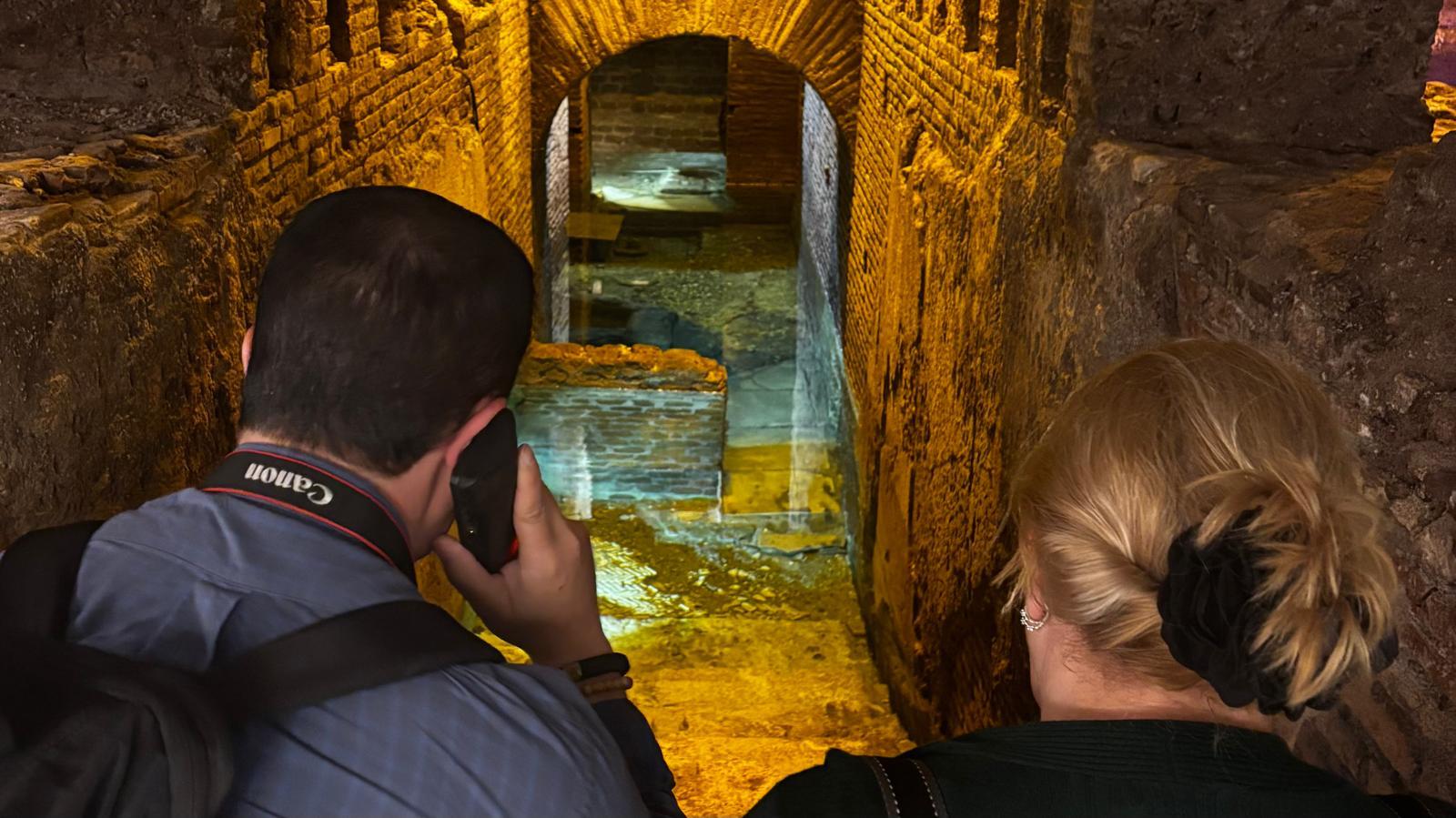
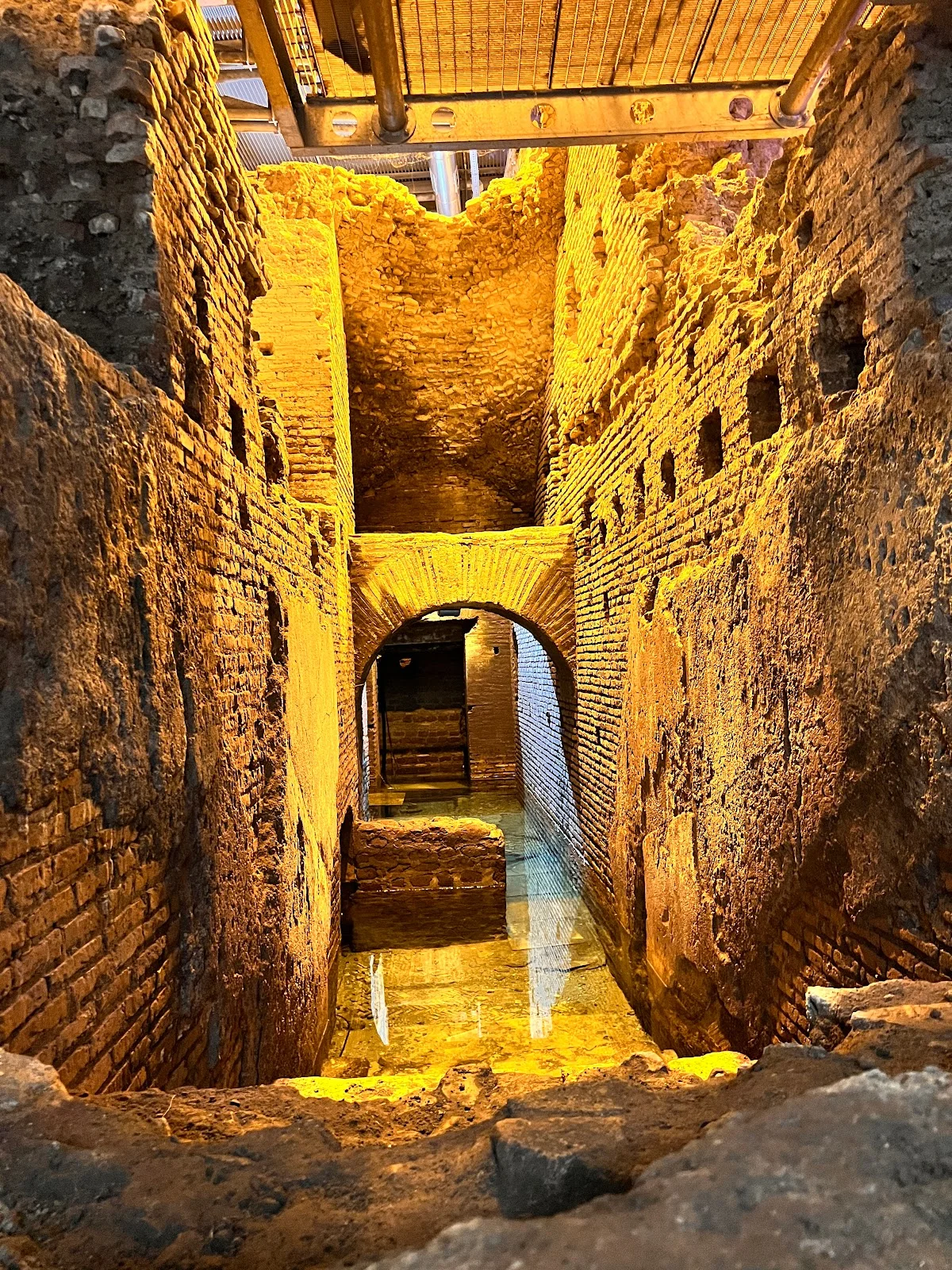
You descend a narrow modern staircase from street level into cool subterranean air that smells faintly of mineral water and old stone. The temperature drops five degrees as you reach the first chamber, where halogen lights illuminate brick arches built during Claudius's reign.
Your guide points to the aqueduct channel running through the far wall, its water audible before visible—a constant murmur that has not stopped for 2,045 years.
You crouch slightly to pass through a doorway scaled for shorter ancients, emerging into the residential section where terracotta roof tiles lean against walls blackened by the fire of 64 CE. Glass panels protect frescoed plaster too fragile to touch. You pause beside the bronze Apollo face, its expression serene despite its violent separation from the body. The guide explains how the lead fistulae were replaced with terracotta after physicians noticed cognitive decline in plumbers.
In the aqueduct gallery, you walk alongside the flowing channel, close enough to feel mist rising from the current. Calcium stalactites hang from barrel vaults like frozen candle wax. The guide directs your attention upward—seven meters of soil and buildings separate you from the tourists throwing coins into the Trevi Fountain overhead. You exit through a different passage, blinking in the sudden Vicolo del Puttarello sunlight, the rush of the aqueduct still audible in your memory.
The site is open Tuesday through Sunday from 11:00 to 17:00, with the last entry at 16:30.
The site involves stairs and uneven surfaces, which may be challenging for those with mobility aids.
Reservations are mandatory on weekends and public holidays and highly recommended on weekdays for your trevi fountain underground tour.
The entrance fee is 4 EUR for full price admission for individual visitors.
Large bags are not permitted due to the limited capacity of the underground space.
Yes, children are welcome on the trevi fountain underground tour as long as they are supervised.
We recommend arriving between 11:00 and 16:00 to avoid the largest crowds.
Yes, you are welcome to take photos during your visit to the site.
Many visitors combine this tour with a walk to the nearby Trevi Fountain or the Column of Marcus Aurelius.